Stress affects the body in ways that reach far beyond mood or emotions. One of the most powerful yet overlooked effects of stress is the way it alters the relationship between cortisol and blood sugar-a cycle that influences energy, cravings, sleep, weight, and hormonal balance.
When cortisol and blood sugar fall out of rhythm, the body sends signals that are easy to mistake for unrelated problems. Understanding how the system works, what throws it off, and what genuinely supports a more stable rhythm gives you a mechanism to work from, not just a checklist.
What Does Cortisol Do?
Cortisol is often referred to as the “stress hormone,” but this nickname doesn’t capture its importance. Cortisol plays a central role in many key functions:
Energy Production and Metabolism
Cortisol helps regulate how the body converts food into usable energy. It works with the liver to release glucose when additional fuel is needed and helps maintain stable blood sugar between meals.
Inflammatory Response
Cortisol helps control inflammation. When balanced, it supports the immune system; when chronically elevated, it becomes less effective, contributing to immune dysfunction.
Circadian Rhythm
Cortisol follows a daily rhythm: highest in the morning to help you wake up, and lowest at night to help you sleep.
Chronic stress disrupts this rhythm, leading to fatigue, nighttime alertness, and restless sleep.
Stress Response
Cortisol prepares the body to handle challenges by increasing alertness, focus, and energy availability.
This response is useful for short-term stress but becomes problematic when activated repeatedly throughout the day.
Cortisol is essential, and the problems begin when it stops cycling properly. When it stays elevated for too long, gets triggered by everyday pressures, or fails to drop in the evening, its connection to blood sugar starts reshaping everything else.
How Cortisol and Blood Sugar Work Together
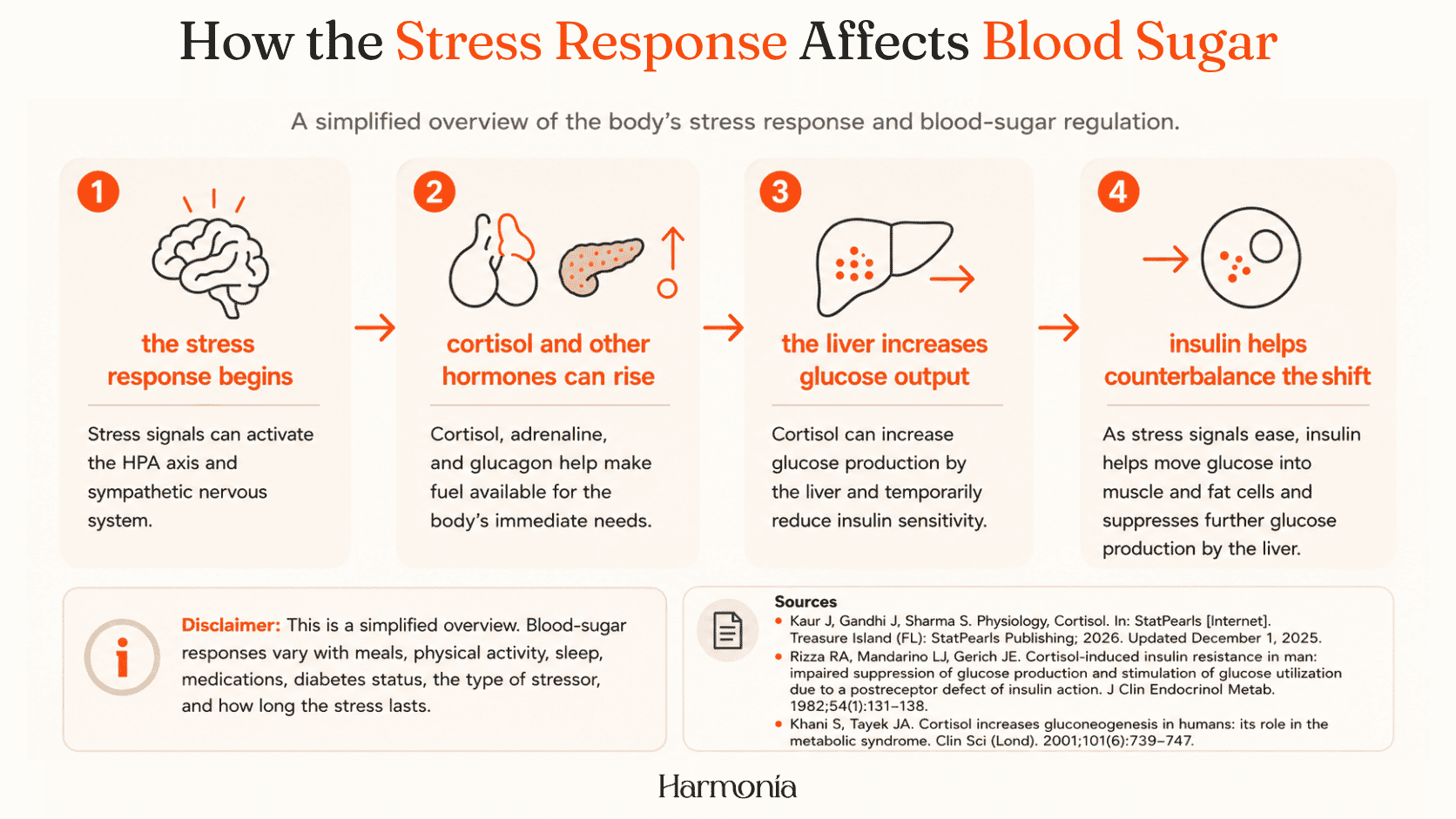
Cortisol and blood sugar are deeply intertwined. When the body senses stress-physical, emotional, or psychological-it signals the adrenal glands to release cortisol.
Cortisol then communicates with the liver to release stored glucose into the bloodstream. This gives the body quick energy to respond to the stressor.
This process happens through three key mechanisms:
1. Gluconeogenesis
Cortisol stimulates the liver to create new glucose from non-carbohydrate sources, ensuring continuous fuel.
2. Insulin Suppression
During stress, cortisol temporarily reduces the action of insulin. This prevents glucose from being stored immediately, keeping it available for fast energy.
3. Short-Term Insulin Resistance
To prioritize immediate energy, the body becomes less responsive to insulin. This resistance is intended to be brief-but when stress becomes frequent or chronic, it lasts much longer.
This explains why someone can feel shaky, anxious, ravenous, or exhausted when cortisol spikes repeatedly. Over time, the cycle becomes self-reinforcing:
- Stress raises cortisol
- Cortisol raises blood sugar
- Blood sugar drops suddenly
- The body craves sugar, caffeine, or carbs
- Eating those foods causes another spike
- Another crash follows
- Stress increases again
Understanding this cycle is the key to breaking it.
Signs Your Cortisol-Blood Sugar Rhythm Is Out of Balance
When cortisol and blood sugar become dysregulated, the body sends clear signals. Many women report these symptoms long before they realize what’s causing them.
Common signs of imbalance include:
- Afternoon crashes, especially between 2-5 PM
- Feeling irritable, shaky, or anxious when hungry
- Intense cravings for sugar or carbs
- Emotional eating or “stress snacking”
- Difficulty falling asleep or waking at 2-4 AM
- Fatigue that doesn’t improve with rest
- Brain fog or trouble focusing
- Increased abdominal fat
- Feeling wired yet tired
- Mood swings or low stress tolerance
These symptoms aren’t separate issues-they’re a pattern.
Interestingly, 80% of women report symptoms consistent with chronic stress and cortisol dysregulation, and many experience them even when eating well or exercising regularly.
Recognizing these signs is the starting point for addressing them.
How High Cortisol Impacts Hormones, Metabolism, and Weight
Cortisol doesn't work alone. It interacts with several other hormones that influence metabolism, mood, appetite, and reproductive health. When cortisol stays high, it disrupts this delicate balance.
Appetite Hormones: Ghrelin & Leptin
High cortisol can increase ghrelin (the hunger hormone) and reduce leptin sensitivity (the fullness hormone). This makes cravings stronger and satisfaction harder to reach.
Insulin and Blood Sugar Regulation
Persistent cortisol elevation causes insulin resistance over time, driving frequent blood sugar spikes, energy crashes, heightened cravings, and difficulty losing weight even when calories are controlled. The insulin resistance that cortisol creates can outlast any individual stressful period.
Estrogen and Progesterone
Cortisol competes with sex hormones for resources. When cortisol is elevated, the body may produce less progesterone, worsening PMS, perimenopause symptoms, and mood changes.
Thyroid Function
Chronic stress slows thyroid hormone conversion, contributing to fatigue, weight changes, and low motivation.
PCOS and Menopause

Women with PCOS already struggle with insulin resistance, making cortisol-related blood sugar swings more noticeable.
Menopausal women often experience increased sensitivity to stress and more pronounced blood sugar fluctuations.
Emotional Eating Pathways
Cortisol activates the brain’s reward centers, making high-sugar foods feel more comforting. Over time, stress and emotional eating become linked.
This is why stress management isn't optional. It's a biological necessity for balanced hormones, stable energy, and metabolic health.
Everyday Factors That Spike Cortisol and Disrupt Blood Sugar
Many factors in a typical daily routine can spike cortisol without a person realizing it. Identifying these patterns is the first step toward creating a supportive environment for the body.
Common cortisol triggers include:
- Poor sleep quality or going to bed too late
- Skipping meals or eating too few calories
- High caffeine intake, especially on an empty stomach
- Ultra-processed or high-sugar foods
- Constant multitasking or mental overload
- Overly intense workouts without proper recovery
- Emotional stress, even from small but constant pressures
- Hormonal changes like PMS, PCOS, perimenopause, or menopause
Even factors that seem unrelated, like scrolling at night, working through lunch, or drinking coffee before eating, can influence cortisol and blood sugar more than expected.
Learning how to reduce or manage these triggers supports a much more balanced internal rhythm.
The Role of Nutrition in Supporting Healthy Cortisol and Balanced Blood Sugar
Food is one of the most powerful tools for stabilizing both cortisol and blood sugar. The goal is consistent nourishment throughout the day, with meals that support a steady release of energy.
Foundational principles include:
- Prioritize Protein Throughout the Day: Protein helps stabilize blood sugar by slowing digestion and supporting steady energy. Women often under-eat protein, which increases cravings and fatigue.
- Eat balanced meals every 3 to 4 hours: spacing meals prevents dramatic drops in blood sugar, the very drops that trigger cortisol spikes.
- Include Healthy Fats and Fiber: These nutrients slow glucose absorption and keep energy stable.
- Emphasize Whole, Minimally Processed Foods: Consistent intake of vegetables, fruits, whole grains, nuts, seeds, and lean proteins supports metabolic stability.
Key Micronutrients for Cortisol Support
- Magnesium: Supports relaxation and blood sugar balance
- Vitamin C: Used heavily by the adrenal glands
- B vitamins: Support energy metabolism
- Chromium: Helps regulate blood sugar and cravings
For a more detailed breakdown by specific food choices, foods that lower and raise cortisol covers which dietary patterns have the most consistent evidence behind them.
Harmonia includes several of these nutrients in its formula, making daily stress and blood sugar support simpler and more consistent for women with busy routines.
Daily Habits to Support Healthy Cortisol and Blood Sugar Regulation

Beyond nutrition, the body responds well to structure. The habits with the most consistent evidence for cortisol regulation target the same HPA axis dysregulation that drives the blood sugar cycle, and the best and worst daily habits for cortisol cover the full picture.
Morning Habits
- Get natural sunlight within the first hour of waking
- Eat a protein-rich breakfast
- Delay caffeine until after the first meal
Throughout the Day
- Take short walks after meals to help stabilize blood sugar
- Practice small stress-reduction techniques (deep breathing, light stretching, pausing between tasks)
- Avoid long gaps between meals
Evening Habits
- Reduce bright light exposure after sunset
- Establish a relaxing pre-sleep routine
- Keep dinner balanced with protein, fiber, and healthy fats
Incorporating a supportive daily ritual, such as drinking Harmonia, helps reinforce these habits by providing ingredients that support relaxation, cravings control, sleep quality, and balanced cortisol levels.

How Harmonia Fits Into a Cortisol-Friendly Lifestyle
The nutrients most depleted by chronic stress (magnesium, vitamin C, B vitamins, and chromium) are also the ones most directly involved in adrenal function and blood sugar regulation.
Harmonia addresses this pattern specifically. KSM-66 ashwagandha anchors the formula because of its demonstrated effect on salivary cortisol in placebo-controlled human trials.
Chromium is included because it supports insulin signaling and helps reduce the glucose-driven cravings that cortisol dysregulation creates.
Myo-inositol and D-chiro inositol target insulin sensitivity, which is particularly relevant for women with PCOS or perimenopause-related blood sugar shifts.
When to Consider Extra Support for Cortisol and Blood Sugar
Extra support becomes particularly valuable if you experience:
- Persistent fatigue even after sleeping
- Difficulty handling daily stress
- Intense cravings or emotional eating
- PMS or perimenopause symptoms that feel amplified
- PCOS-related blood sugar challenges
- Restless nights or difficulty staying asleep
- Frequent mood swings or low stress tolerance
- “Wired but tired” energy cycles
- Afternoon slumps
If these patterns feel familiar, supportive habits and a targeted daily supplement like Harmonia can help create a more stable cortisol rhythm and smoother blood sugar balance.
Conclusion
The relationship between cortisol and blood sugar shapes more of daily experience than most people realize. Energy, cravings, sleep, weight, mood, and hormonal balance all run through the same system.
The patterns in this article form a cycle with a consistent mechanism. Addressing that mechanism, through food timing, stress management, sleep, and the specific nutrients the adrenal glands actually need, is what moves the cycle in a better direction.
It takes time. The HPA axis doesn't reset quickly. But consistent inputs produce consistent results.
If your symptoms have been pointing toward a disrupted cortisol pattern, you can take the quiz to see whether the Harmonia Cortisol Cocktail fits where you are right now.
References
- Ans, A. H., Anjum, I., Satija, V., Inayat, A., Asghar, Z., Akram, I., ... & Ans, A. (2018). Neurohormonal regulation of appetite and its relationship with stress: A mini literature review. Cureus, 10(7). Link.
- Liu, Q., Lin, Y., & Zhang, W. (2024). Psychological stress dysfunction in women with premenstrual syndrome. Heliyon, 10(22). Link.
- Morais, J. B. S., Severo, J. S., Beserra, J. B., de Oiveira, A. R. S., Cruz, K. J. C., de Sousa Melo, S. R., ... & do Nascimento Marreiro, D. (2019). Association between cortisol, insulin resistance and zinc in obesity: a mini-review. Biological trace element research, 191(2), 323-330. Link.
- O'Byrne, N. A., Yuen, F., Butt, W. Z., & Liu, P. Y. (2021). Sleep and circadian regulation of cortisol: a short review. Current opinion in endocrine and metabolic research, 18, 178-186. Link.