Modern life doesn't come with a pause button. Your body feels every bit of it. But when stress becomes chronic, it can trigger more than just fatigue or anxiety.
It can cause a cortisol headache that no amount of coffee or painkillers can fix.
Understanding how stress hormones affect your head, mood, and energy is the starting point for real relief.
What Is a Cortisol Headache?
A cortisol headache is a stress-induced headache caused by imbalanced levels of cortisol, the body's primary stress hormone.
Cortisol helps you stay alert and energized in short bursts. But when it stays high for too long, your body remains in a “fight-or-flight” state, tightening muscles, increasing blood pressure, and disrupting normal hormone rhythms.
That constant tension can create dull, throbbing pain, especially around the temples, back of the head, or neck. It's not "just a headache." It's your body signaling hormone overload.
Many women wonder: can cortisol cause headaches? Yes. Both high and low cortisol levels can. When cortisol spikes, it restricts blood vessels and increases inflammation. When it crashes, fatigue, dizziness, and pain follow. The distinction between acute and chronic cortisol exposure determines which headache pattern you're experiencing.
How Cortisol and Stress Trigger Headaches

When you’re stressed, your adrenal glands release cortisol and adrenaline to keep you alert. Short-term, this response is helpful. But long-term? It’s draining.
Here’s what happens:
- High cortisol levels cause muscle tension, especially in the shoulders and neck.
- Blood vessels narrow, reducing oxygen flow to the brain.
- The nervous system becomes overstimulated - heightening pain sensitivity.
That’s why you might notice headaches on stressful days or during sleepless nights. The connection between high cortisol and headaches is real - and it’s your body’s way of saying, “I need a break.”
Even after cortisol eventually drops, you can experience a low cortisol headache, where fatigue and weakness replace the initial tension and pressure.
The relationship also runs both ways. Pain itself activates the HPA axis and triggers cortisol release, so an active headache can perpetuate another round of cortisol output, extending the cycle.
Can a Hormone Imbalance Cause Headaches?
Absolutely. Hormones are like an orchestra: when one instrument falls out of tune, the entire symphony feels off.
Your body relies on a delicate balance between cortisol, estrogen, progesterone, thyroid hormones, and insulin to function smoothly. When one of these hormones spikes or drops, it can easily lead to headaches, fatigue, and mood changes.
For many women, cortisol imbalance is the first domino to fall. Chronic stress causes cortisol levels to rise, which can then suppress progesterone and disrupt estrogen metabolism.
Over time, this creates a ripple effect that influences your entire hormonal rhythm - especially during PMS, perimenopause, PCOS, or thyroid imbalance.
In short: when your stress hormones stay elevated, your reproductive hormones struggle to stay balanced, and your head feels the pressure. Chronic cortisol-driven inflammation affects multiple body systems, from cortisol-related skin changes to hormone headaches, through the same underlying pathway.
What Does a Cortisol Headache Feel Like?

If you've ever experienced a headache that flares up during stressful days, one that feels like a tight band around your head or a heavy fog you can't shake, it may not just be tension. It could be a cortisol headache.
Unlike typical headaches triggered by dehydration or poor posture, a cortisol headache stems from hormonal stress overload.
Cortisol headaches tend to concentrate at the base of the skull, temples, and along the neck and shoulders, where chronic muscle tension accumulates. This distinguishes them from sinus headaches (front-facing pressure behind the eyes) and migraines (one-sided, often light-sensitive).
When your cortisol levels rise and stay elevated for too long, blood vessels constrict, muscles tighten, and inflammation increases - all of which can create a lingering, pressure-filled pain that’s hard to relieve with standard painkillers.
For many women, this type of headache comes with a sense of being "on edge but exhausted." Your body is wired, but your mind feels completely drained. Here are the most common signs and sensations to look out for:
- Dull pressure or tightness around the temples or base of the skull
- Pain that worsens with stress, multitasking, or fatigue
- Brain fog, anxiety, or trouble concentrating
- Neck or shoulder tension that won’t go away
- Difficulty sleeping or feeling “wired but tired”
A high cortisol headache often mirrors a tension headache but with extra mental restlessness: you may feel alert yet overstimulated. On the other hand, a low cortisol headache can cause dizziness, heaviness, or brain fog, especially after chronic stress or burnout.
Recognizing these patterns can help you identify when stress hormones - not just lifestyle triggers - are the real cause behind your discomfort.
Natural Ways to Relieve Cortisol Headaches
Painkillers can dull the ache for a few hours - but they don’t solve the problem. To truly relieve a cortisol headache, you need to calm the stress response at its source: hormonal imbalance and adrenal overload.
When your cortisol levels stay too high (or drop too low), your nervous system can’t reset. The key to long-term relief lies in restoring your body’s natural cortisol rhythm through daily habits and targeted support.
Here are science-backed ways to help your body rebalance and stop stress-induced headaches:

1. Prioritize Deep, Restorative Sleep
Cortisol follows a daily rhythm - it should be highest in the morning and lowest at night. Chronic stress or poor sleep reverses that pattern, leaving you wired at bedtime and sluggish in the morning.
- Create a bedtime ritual: Dim the lights, limit screens, and aim for 7–9 hours of consistent sleep.
- Magnesium, GABA, and L-Theanine can help relax your nervous system naturally.
2. Balance Blood Sugar to Prevent Cortisol Spikes
Blood sugar fluctuations trigger cortisol surges - especially when you skip meals or rely on caffeine and sugar.
- Eat every 3-4 hours, pairing protein, fiber, and healthy fats at each meal.
- Focus on complex carbs like quinoa, oats, or sweet potatoes to stabilize energy and reduce cortisol-driven cravings.
3. Move Gently to Release Tension

While intense workouts can be healthy, they can also raise cortisol when your body is already stressed.
- Opt for low-impact movement: yoga, Pilates, walking, or somatic exercises to lower cortisol, which activate the parasympathetic nervous system and ease muscle tension.
- Gentle movement supports endorphin release, which can ease both pain and anxiety linked to high cortisol headaches.
4. Practice Mindful Breathing and Relaxation
Even five minutes of intentional breathing can lower cortisol and shift your body out of “fight-or-flight” mode.
- Try the 4-7-8 technique: inhale for 4 seconds, hold for 7, exhale for 8.
- Combine it with meditation, journaling, or gratitude to retrain your nervous system’s stress response.
5. Support Hormonal Balance with Adaptogens and Nutrients
Certain herbs and nutrients can help your body adapt to stress and normalize cortisol production. These are known as adaptogens, and they’ve been studied for their ability to reduce fatigue and improve resilience.
- Ashwagandha – Shown to lower cortisol and promote calm focus.
- Rhodiola Rosea – Helps prevent burnout and improves mental energy.
- Myo-Inositol & D-Chiro Inositol – Support hormonal balance and insulin sensitivity, key for women with PCOS or stress-related imbalances.
- Turmeric & Phosphatidylserine – Reduce inflammation and support brain health, both of which play roles in cortisol-related headaches.
The evidence behind individual adaptogens varies considerably by dose and duration. Not every herb works the same for every stress pattern, so combination formulas are worth evaluating on their specific ingredient profiles and clinical backing.
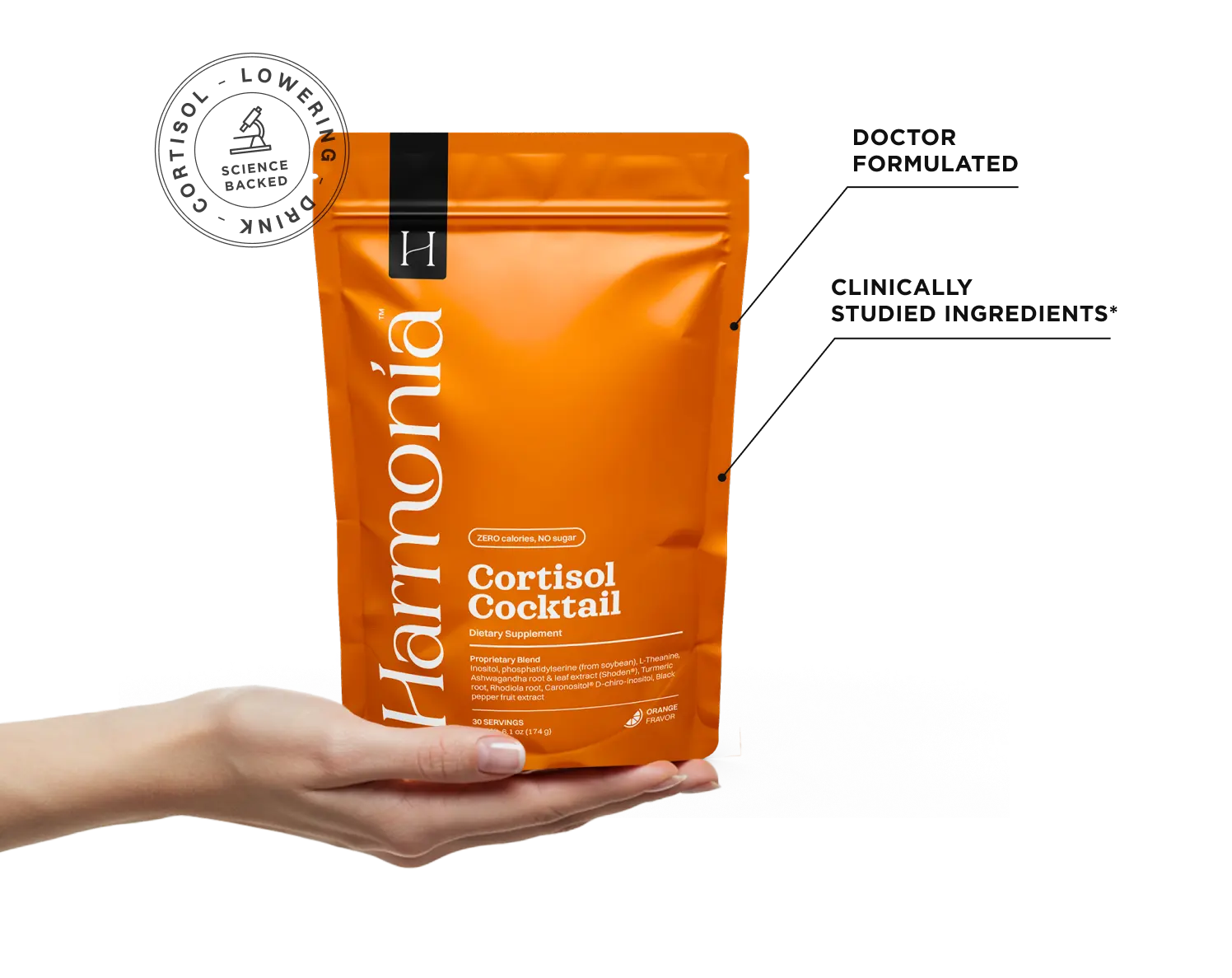
The Harmonia Cortisol Cocktail combines these clinically backed ingredients into one delicious, plant-based drink designed to lower stress hormones, restore hormonal balance, and promote deep calm - all while supporting your mood, sleep, and energy.
By giving your body what it needs to regulate cortisol naturally, you’re not just treating the headache - you’re helping prevent it from returning.
Supporting Hormone Balance Naturally with Harmonia

The adaptogens above work through the HPA axis over weeks of consistent use. Harmonia combines KSM-66 ashwagandha, Rhodiola rosea, phosphatidylserine, and L-theanine because each targets a different layer of the cortisol-headache cycle.
Ashwagandha works on the HPA axis directly. A 2025 systematic review and meta-analysis in BJPsych Open found that ashwagandha supplementation significantly reduced cortisol and perceived stress across 12 trials in adults with chronic stress.
Phosphatidylserine blunts the acute cortisol spike, which is often where cortisol headaches originate. L-theanine supports calm alertness without sedation, which helps prevent the nervous system from staying in sustained threat mode.
The Harmonia cortisol cocktail isn't a painkiller. It works on the stress response that generates the pain.
When to See a Doctor
While cortisol headaches are often stress-related, it’s important to check with your healthcare provider if you experience:
- Chronic or worsening headaches
- Vision changes or dizziness
- Fatigue, unexplained weight gain, or irregular periods
These could indicate deeper hormonal or adrenal issues that need medical evaluation. Harmonia supports your wellness routine - but it’s not a replacement for medical advice.
Final Thoughts
A cortisol headache isn’t just about pain - it’s a sign your body is overwhelmed by stress and hormonal imbalance.
By listening to these signals and supporting your cortisol rhythm, you can restore calm, clarity, and energy naturally.
If you’re ready to lower your stress levels, improve your sleep, and bring your hormones back into harmony - Harmonia’s Cortisol Cocktail can help you get there.
Your calm starts here. Buy Harmonia now or Take the quiz to find your ideal formula today.
References
- Anghelescu, I. G., Edwards, D., Seifritz, E., & Kasper, S. (2018). Stress management and the role of Rhodiola rosea: a review. International journal of psychiatry in clinical practice, 22(4), 242-252. Link.
- Bachour, G., Samir, A., Haddad, S., Houssaini, M. A., & El Radad, M. (2025). Effects of Ashwagandha Supplements on Cortisol, Stress, and Anxiety Levels in Adults: A Systematic Review and Meta-Analysis. BJPsych Open, 11(S1), S39-S39. Link.
- Dinicola, S., Chiu, T. T., Unfer, V., Carlomagno, G., & Bizzarri, M. (2014). The rationale of the myo‐inositol and D‐chiro‐inositol combined treatment for polycystic ovary syndrome. The Journal of Clinical Pharmacology, 54(10), 1079-1092. Link.
- Stachowicz, M., & Lebiedzińska, A. (2016). The effect of diet components on the level of cortisol. European Food Research and Technology, 242(12), 2001-2009. Link.