Most women dealing with hormonal symptoms have already tried something. A new supplement, a dietary change, cutting caffeine. The results are inconsistent because most approaches treat the symptoms, not the system.
Vitamins like D and B6, minerals like magnesium, and adaptogens like ashwagandha work differently. They give your body the raw materials and stress-regulation support it needs to produce and balance hormones on its own.
Hormonal imbalance is something most women experience at some point in their lives. From irregular cycles and mood swings to fatigue and stubborn weight changes, these symptoms can feel overwhelming and disruptive.
While medical treatments are sometimes necessary, many women are looking for natural ways to restore balance and support their overall well-being.
One of the most effective approaches involves using targeted hormonal imbalance supplements. Nutrients, vitamins, and plant extracts can provide the building blocks your body needs to regulate estrogen, progesterone, and stress hormones like cortisol.
When paired with healthy lifestyle habits, supplements can be a game-changer for women struggling with hormonal shifts.
Understanding Hormonal Imbalance in Women
Hormones are chemical messengers that regulate almost every system in the body - metabolism, mood, energy, fertility, and even sleep. When levels of key hormones like estrogen, progesterone, insulin, thyroid hormones, and cortisol shift out of balance, symptoms can appear quickly.
Common signs of hormonal imbalance include:
- Unexplained fatigue or low energy
- Mood swings, anxiety, or irritability
- Weight gain or difficulty losing weight
- Irregular or painful menstrual cycles
- Hot flashes or night sweats during perimenopause/menopause
- Sleep problems, including insomnia or restless nights
- Food cravings, particularly for carbs and sugar
Life stages such as puberty, pregnancy, perimenopause, and menopause often bring natural hormone changes. But modern stress levels, environmental toxins, and nutrient-depleted diets have made imbalance more widespread than ever.
Why Women Turn to Supplements for Hormone Balance

While medications like birth control or hormone replacement therapy (HRT) are sometimes prescribed, they are not always the right choice for every woman. Many are seeking natural alternatives that help the body self-regulate rather than override its natural processes.
Supplements can help because they:
- Provide essential vitamins and minerals your body needs to make hormones.
- Support adrenal health to regulate stress hormones like cortisol.
- Promote balance between estrogen and progesterone.
- Reduce inflammation that disrupts hormonal pathways.
- Improve energy, sleep, and mood naturally.
Most women notice meaningful improvement within 4 to 6 weeks of consistent use, though cycle-related symptoms often take two to three full cycles to shift. The evidence is clearest when supplementation is matched to the specific hormonal pattern driving symptoms, not used as a catch-all.
Key Nutrients and Vitamins That Support Hormone Balance
Vitamin D
Often called the “sunshine vitamin,” Vitamin D plays a key role in reproductive health and immune balance. Deficiency has been linked to irregular menstrual cycles, fertility issues, and mood disorders. Adequate Vitamin D levels help regulate estrogen and progesterone, while also supporting strong bones.
B Vitamins
The B-complex family (B6, B12, Folate) is critical for energy production, neurotransmitter health, and stress resilience. Vitamin B6, in particular, is linked to reducing PMS symptoms like irritability and bloating. Folate and B12 help regulate homocysteine levels, important for heart health and hormone metabolism.
Magnesium
Magnesium is often called “nature’s relaxant.” It calms the nervous system, reduces PMS-related cramps, and improves sleep quality. It also plays a role in insulin sensitivity and energy regulation, making it a cornerstone for hormonal balance.
Vitamins C & E
These antioxidants protect the adrenal glands and support healthy cortisol regulation. They also improve skin health, immune function, and overall resilience against oxidative stress, which often worsens hormonal issues.
Omega-3 fatty acids are another nutrient the evidence consistently supports for hormonal health. They reduce systemic inflammation, which is one of the primary drivers of hormonal disruption in conditions like PCOS and perimenopause. The evidence on omega-3s for PMS symptom relief is also reasonably strong, with several trials showing reductions in cramping and mood symptoms.
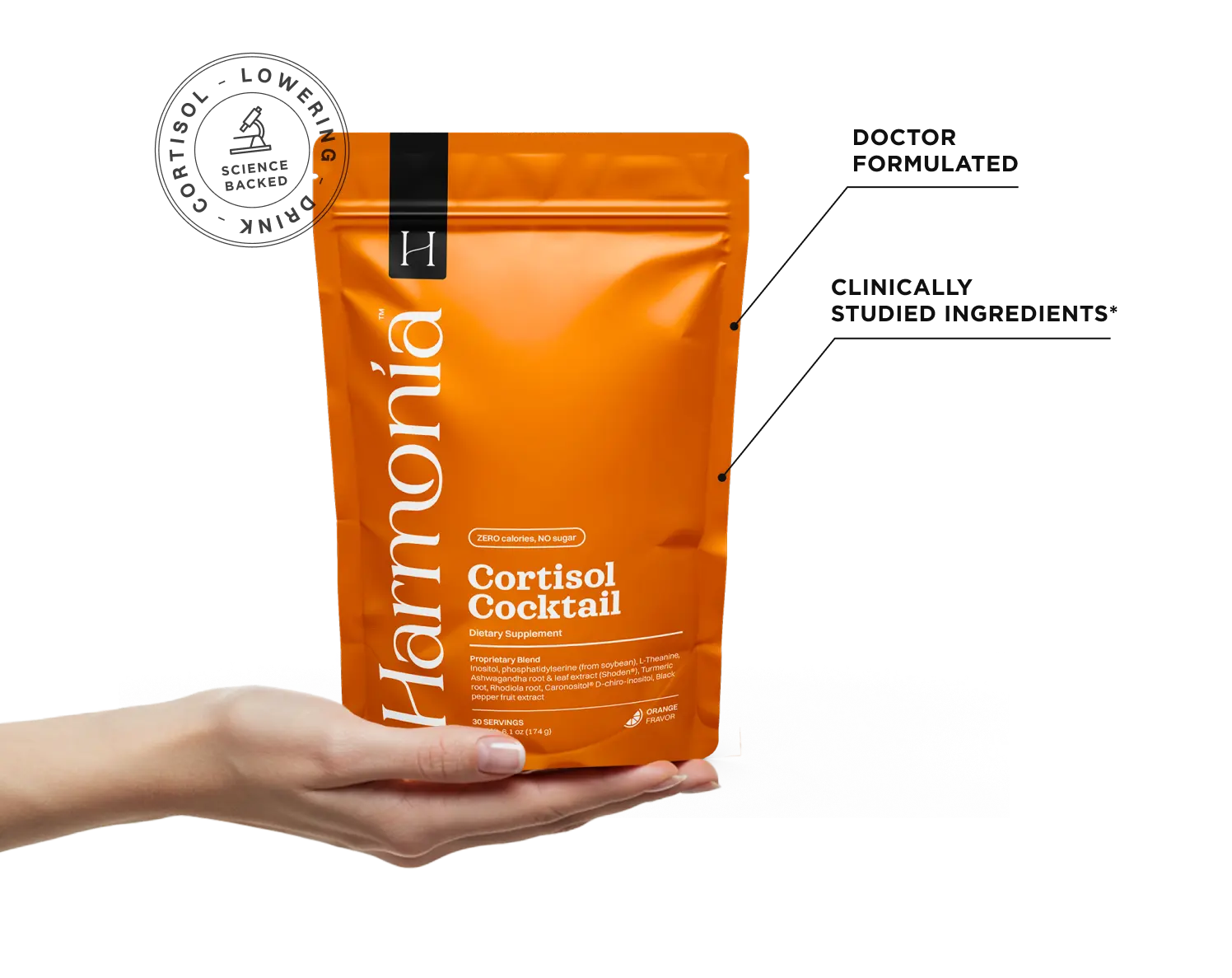
Where It Comes Together: Many of these same compounds—Ashwagandha, Rhodiola, Inositols, Turmeric, L-Theanine, Phosphatidylserine, plus supportive vitamins and minerals—are combined in the Harmonia Cortisol Cocktail. This makes it a convenient daily option for women looking to support hormonal balance, lower stress, and improve overall well-being without having to take multiple separate supplements.
Herbal and Natural Compounds for Hormonal Support

Ashwagandha
This powerful adaptogen helps lower cortisol, the stress hormone. By reducing stress and supporting the nervous system, Ashwagandha helps balance mood, reduce anxiety, and support healthier cycles.
Rhodiola Rosea
Known for its ability to enhance resilience, Rhodiola combats fatigue and supports better stress management. It helps women maintain energy and focus even during hormonal transitions.
Myo-Inositol & D-Chiro Inositol
These two nutrients are particularly valuable for women with PCOS (polycystic ovary syndrome). They improve insulin sensitivity, regulate ovarian function, and help restore healthy menstrual cycles. Together, they also reduce carb cravings and stabilize blood sugar.
The ratio matters. Research points to a 40:1 combination of Myo-Inositol to D-Chiro Inositol as the most studied ratio for PCOS-related hormonal and metabolic outcomes. Supplements that don't specify the ratio are worth questioning.
Turmeric
Curcumin, the active compound in turmeric, has powerful anti-inflammatory properties. It supports healthy hormone metabolism, helps regulate lipid balance, and contributes to overall reproductive health.
L-Theanine
Found in green tea, L-Theanine promotes calmness by increasing GABA, serotonin, and dopamine. It helps counteract the stimulating effects of caffeine and improves sleep quality while reducing anxious thoughts.
Phosphatidylserine
This compound plays a key role in brain health and stress regulation. By modulating cortisol response, it helps the body adapt to stress more effectively, protecting both mood and hormonal balance.
Several of these ingredients, including KSM-66 Ashwagandha, Rhodiola Rosea, both inositols, L-theanine, Phosphatidylserine, magnesium, vitamin D, and B vitamins, are formulated together in the Harmonia Cortisol Cocktail. The combination targets the cortisol-reproductive hormone relationship specifically, which is why the formula focuses on stress-system support rather than estrogen or progesterone directly.
Lifestyle Factors That Enhance Supplement Effectiveness
Supplements are most effective when combined with healthy lifestyle choices. Hormonal health is a system, and it thrives when multiple pieces are in alignment.
- Balanced diet: Prioritize whole foods, lean proteins, healthy fats, and fiber-rich vegetables to provide steady energy and nutrients.
- Sleep: Poor sleep directly increases cortisol and disrupts reproductive hormones. Aim for 7–9 hours of quality rest.
- Stress management: Practices like yoga, meditation, and breathwork keep cortisol in check.
- Physical activity: Strength training and regular movement improve insulin sensitivity and mood.
- Avoiding toxins: Limit exposure to plastics, pesticides, and processed foods that act as endocrine disruptors.
Cortisol sits at the intersection of most of these lifestyle factors. If you want to understand why the stress hormone is often the first domino that tips the others, cortisol is not the enemy covers the underlying physiology clearly.
How to choose the right supplement for your hormonal pattern
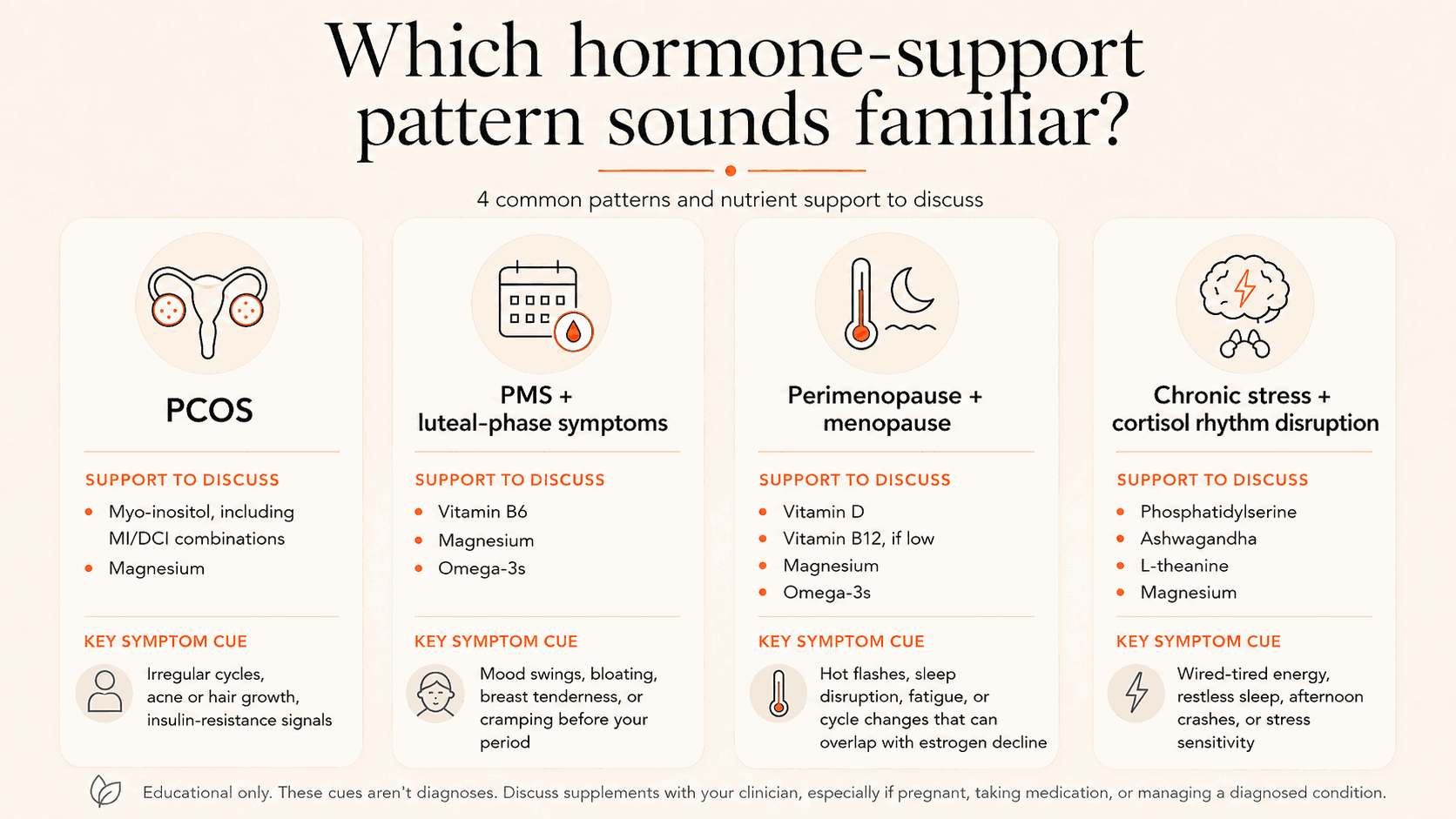
The most common mistake is treating hormonal imbalance as a single condition. It isn't. The right supplements depend on which hormone system is driving your symptoms.
- PCOS: myo-inositol at a 40:1 ratio with D-chiro inositol, plus magnesium for insulin sensitivity.
- PMS and cycle irregularity: vitamin B6, magnesium, and omega-3s have the strongest evidence for cycle-related symptoms.
- Perimenopause and menopause: vitamin D and B12 for mood and bone support; adaptogens like ashwagandha and Rhodiola for the fatigue and sleep disruption that often accompany estrogen decline.
- Chronic stress and cortisol dysregulation: phosphatidylserine, ashwagandha, and L-theanine target the HPA axis directly. This is the pattern most relevant to women whose primary complaint is fatigue, belly weight, and poor sleep despite adequate hours.
For women whose symptoms point more specifically toward the cortisol-weight connection, why you can't lose weight under stress explains the mechanism behind why stress-driven hormonal shifts make standard diet approaches fail.
Harmonia: Smart Cortisol & Hormone Balance Support
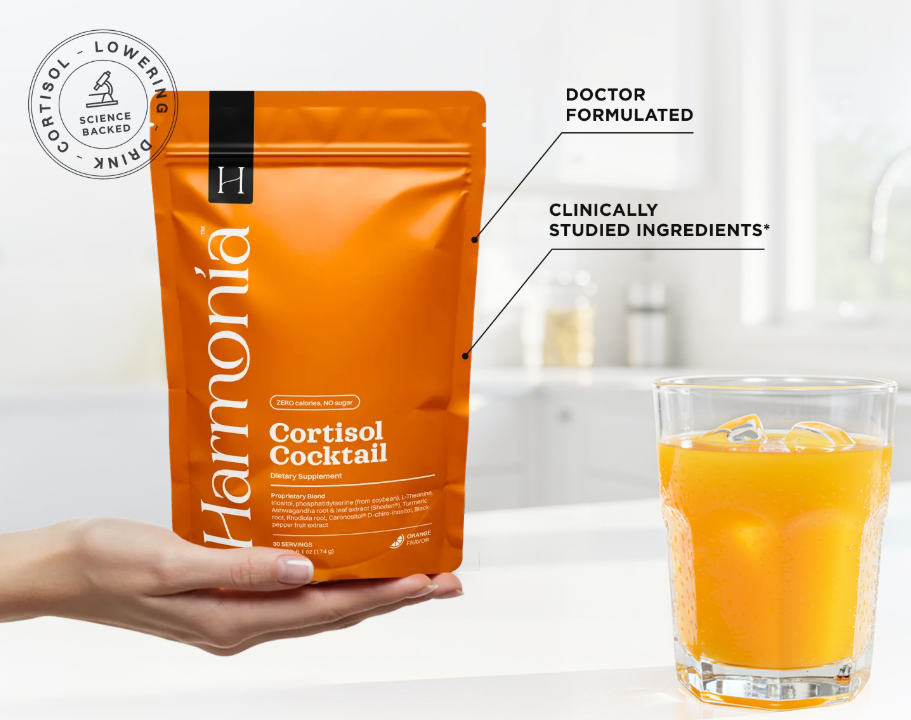
While many supplements contain one or two active ingredients, Harmonia was designed as a comprehensive solution for modern women dealing with stress, fatigue, and hormonal imbalance. Its unique blend combines the most effective vitamins, minerals, and herbs already discussed - making it a complete support system in one.
- Ashwagandha
- Rhodiola Rosea
- Myo-Inositol & D-Chiro Inositol
- Turmeric
- L-Theanine
- Phosphatidylserine
- Magnesium, Vitamin D, B6, B12, Folate, Vitamin C, and Potassium
Conclusion
Hormonal imbalance affects women at every stage of life, but with the right support, you can restore stability, energy, and confidence. Supplements play a powerful role in balancing hormones naturally - whether through vitamins like D and B-complex, minerals like magnesium, or adaptogenic herbs like Ashwagandha, Rhodiola, and Turmeric.
When combined with healthy lifestyle choices, these nutrients can reduce stress, improve sleep, stabilize cycles, and support overall well-being.
If you’re ready to discover a smarter way to bring your hormones back into balance, Harmonia offers a research-backed formula that unites the most effective ingredients into one easy daily drink.
If your symptoms have been pointing toward a cortisol-driven hormonal pattern, you can take the quiz to see whether the Harmonia Cortisol Cocktail fits where you are right now.
References
- Anghelescu, I. G., Edwards, D., Seifritz, E., & Kasper, S. (2018). Stress management and the role of Rhodiola rosea: a review. International journal of psychiatry in clinical practice, 22(4), 242-252. Link.
- Bachour, G., Samir, A., Haddad, S., Houssaini, M. A., & El Radad, M. (2025). Effects of Ashwagandha Supplements on Cortisol, Stress, and Anxiety Levels in Adults: A Systematic Review and Meta-Analysis. BJPsych Open, 11(S1), S39-S39. Link.
- Bulman, A., D’Cunha, N. M., Marx, W., Turner, M., Mckune, A., & Naumovski, N. (2025). The effects of L-theanine consumption on sleep outcomes: A systematic review and meta-analysis. Sleep medicine reviews, 81, 102076. Link.
- Dinicola, S., Chiu, T. T., Unfer, V., Carlomagno, G., & Bizzarri, M. (2014). The rationale of the myo‐inositol and D‐chiro‐inositol combined treatment for polycystic ovary syndrome. The Journal of Clinical Pharmacology, 54(10), 1079-1092. Link.
- Grundmann, M., & von Versen-Höynck, F. (2011). Vitamin D-roles in women's reproductive health?. Reproductive biology and endocrinology, 9(1), 146. Link.
- Hyman, M. A. (2007). The life cycles of women: Restoring balance. Alternative therapies in health and medicine, 13(3), 10-17. Link.
- McCabe, D., Lisy, K., Lockwood, C., & Colbeck, M. (2017). The impact of essential fatty acid, B vitamins, vitamin C, magnesium and zinc supplementation on stress levels in women: a systematic review. JBI Evidence Synthesis, 15(2), 402-453. Link.