
If you're searching for how to reverse adrenal fatigue naturally, you've probably tried sleeping longer and still wake up exhausted. That pattern deserves attention.
Adrenal fatigue is not a recognized medical diagnosis, and no validated test confirms it. The symptoms need a cause-first evaluation because sleep disorders, iron deficiency, thyroid disease, medication effects, perimenopause, mood disorders, post-viral illness, and adrenal insufficiency can overlap.
Cortisol remains an essential hormone rather than a toxin to clear. The broader explanation of why cortisol is not the enemy helps separate normal stress physiology from an endocrine disorder.
Recovery depends on identifying what is sustaining the fatigue, then matching the response to that cause.
Can adrenal fatigue be reversed naturally?
Adrenal fatigue cannot be medically reversed because it is not a recognized diagnosis. The symptoms attached to the label can improve when their actual cause is identified and treated. Common possibilities include insufficient sleep, iron deficiency, thyroid disease, medication effects, perimenopause, mood disorders, under-fueling, post-viral illness, and recognized adrenal insufficiency.
What people mean by adrenal fatigue
The phrase usually describes persistent fatigue, poor sleep, brain fog, cravings, and reduced tolerance for everyday demands. Those symptoms can occur together, yet they do not point to one biological cause.
The theory claims that prolonged stress wears down the adrenal glands until cortisol output falls. A 2016 systematic review of 58 studies found no evidence supporting adrenal fatigue as a medical diagnosis, and the Endocrine Society does not recognize the condition.
The symptoms remain worth investigating. A disputed label cannot identify sleep apnea, iron deficiency, thyroid disease, depression, perimenopause, medication effects, or adrenal insufficiency.
Adrenal fatigue vs. adrenal insufficiency
Adrenal insufficiency is a recognized disorder in which the body produces too little cortisol because of an adrenal, pituitary, hypothalamic, or medication-related cause.
Doctors diagnose adrenal insufficiency with hormone testing matched to the clinical question. Treatment uses medicines that replace missing hormones and includes planning for illness, surgery, and other physical stressors.
What can cause adrenal-fatigue symptoms?
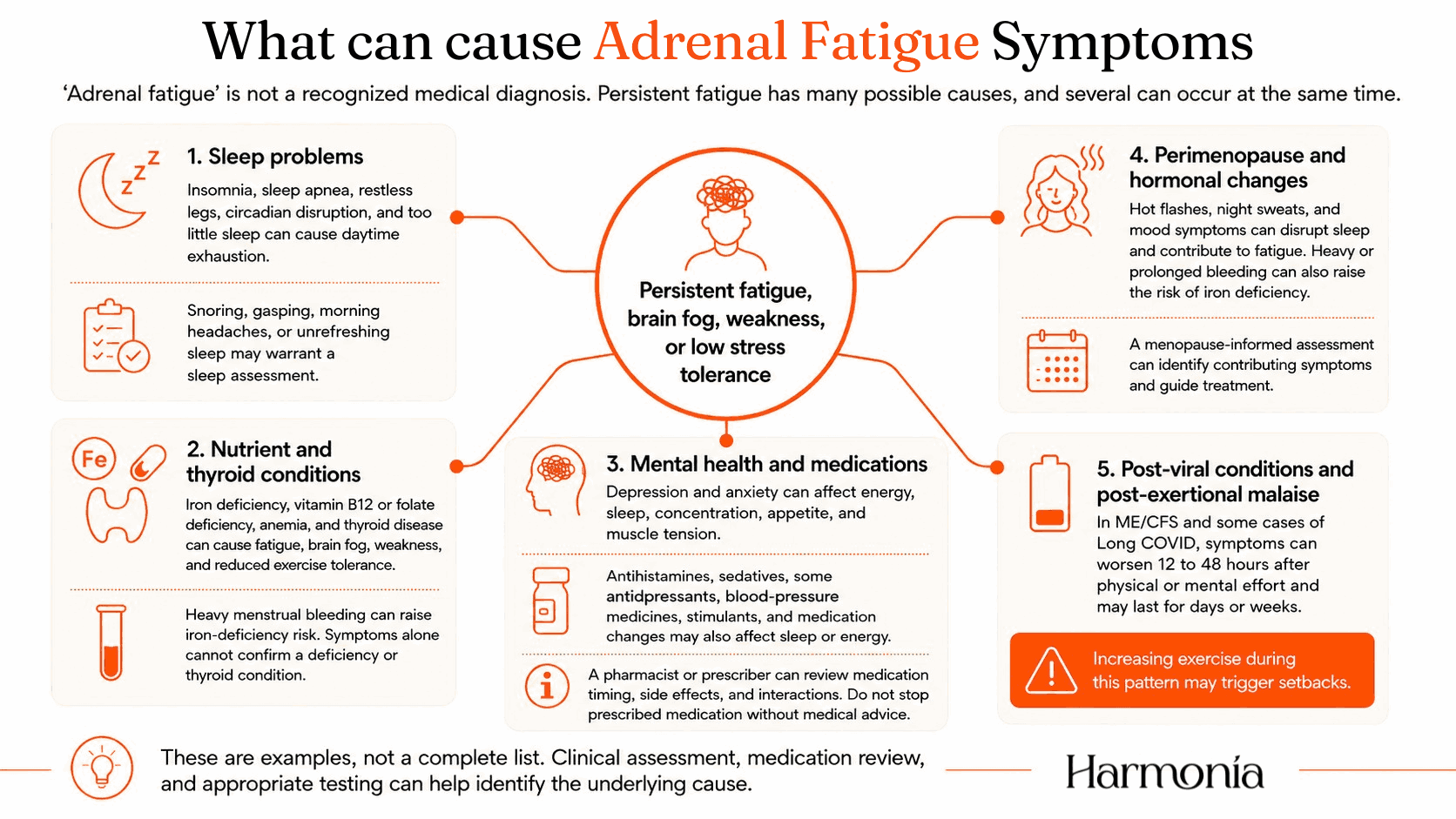
Persistent fatigue has many possible causes, and several can occur at the same time.
Sleep disorders and insufficient sleep
Insomnia, sleep apnea, restless legs, circadian disruption, and too little total sleep can all produce daytime exhaustion and low stress tolerance.
Healthy sleep depends on duration, quality, timing, regularity, and the absence of untreated sleep disorders. Recurrent snoring, gasping, morning headaches, or sleep that never feels refreshing deserves a sleep assessment.
Iron, B12, folate, and thyroid conditions
Iron deficiency, anemia, vitamin B12 or folate deficiency, and thyroid disease can produce fatigue, brain fog, weakness, and exercise intolerance.
Heavy menstrual bleeding raises the likelihood of iron deficiency. Cold intolerance, constipation, dry skin, or a marked weight change can support a thyroid evaluation, while symptoms alone cannot confirm either condition.
Depression, anxiety, and medication effects
Depression and anxiety can feel intensely physical, including slowed thinking, poor sleep, muscle tension, appetite changes, and exhaustion.
Antihistamines, sedatives, some antidepressants, blood-pressure medicines, stimulants, and medication changes can also affect sleep or energy. A pharmacist or prescriber can review the timing, dose, and interaction pattern.
Perimenopause and hormonal changes
Perimenopause can disturb sleep through hot flashes, night sweats, cycle changes, and mood symptoms.
The National Institute on Aging notes that menopausal symptoms can contribute to poor sleep. Menopause-informed care can address these symptoms directly instead of assigning them to adrenal fatigue.
Post-viral illness and post-exertional malaise
A delayed crash after activity is a different pattern from ordinary deconditioning.
The CDC describes post-exertional malaise as symptom worsening after physical or mental effort, often beginning 12 to 48 hours later and lasting for days or weeks. Increasing exercise during this pattern can trigger repeated setbacks.
Persistent-fatigue evaluation framework
When symptoms need medical care
Prompt medical evaluation matters when fatigue appears with weight loss, persistent nausea or vomiting, fainting, very low blood pressure, severe weakness, abdominal pain, or a major decline in daily function.
Skin darkening and strong salt cravings can occur in primary adrenal insufficiency, while secondary and glucocorticoid-related forms may present differently. The NIDDK overview of adrenal-insufficiency symptoms explains why symptom patterns and causes vary.
Prescription glucocorticoids can suppress natural cortisol production. The 2024 joint Endocrine Society guideline states that risk depends on the drug, dose, treatment length, potency, route, and individual susceptibility. Tapering should follow the prescribing clinician's plan.
Urgent care: Severe vomiting or diarrhea, confusion, loss of consciousness, or sudden severe pain in the abdomen, lower back, or legs can signal adrenal crisis in someone with adrenal insufficiency. Emergency treatment is required.

What actually helps persistent fatigue naturally?
Natural recovery steps work best when they match a recognized contributor to the fatigue.
Stabilize sleep timing and protect total sleep
A consistent sleep and wake schedule can support circadian timing, while adequate total sleep remains necessary.
The NIH healthy-sleep guidance recommends keeping weeknight and weekend schedules close, reducing bright evening light, and speaking with a clinician when sleep problems persist. Morning light can help anchor the sleep-wake rhythm.
Eat enough and eat regularly enough for your needs
Under-fueling can produce fatigue, irritability, poor concentration, and energy crashes.
Meals that contain protein, fiber-rich carbohydrate, and fat can support steadier energy. There is no universal requirement to eat every 3 hours, and people using diabetes medication or managing an eating disorder need individualized guidance. The same practical foundation appears in Harmonia's overview of foods that lower and raise cortisol.
Test and correct nutrient deficiencies
A confirmed deficiency creates a clear treatment target.
Iron, vitamin B12, folate, and vitamin D should be assessed in context, then treated at an appropriate dose. Iron supplementation without a reason can cause harm, and persistent deficiency needs its cause investigated.
Reduce caffeine gradually
A gradual reduction can protect sleep while limiting withdrawal headaches and fatigue.
Move the final caffeinated drink earlier first, then reduce the total amount if sleep or anxiety remains affected. Caffeine cannot explain every fatigue pattern, so persistent symptoms still need a broader review.
Match activity to your current tolerance
Movement can support health when it does not trigger delayed symptom worsening.
Begin with an amount you can repeat without a marked next-day decline. A crash 12 to 48 hours after minor physical or mental effort calls for pacing and clinical assessment before activity is increased.
Treat chronic stress and mood symptoms directly
Therapy, workload changes, social support, relaxation practice, and treatment for anxiety or depression can improve sleep and daily function.
These are medical and behavioral tools, not consolation prizes. Harmonia's evidence-ranked overview of natural ways to lower cortisol covers practical stress-response habits without turning cortisol into a diagnosis.
Review medications and hormonal changes
A medication and hormone review can uncover a reversible contributor that a supplement plan would miss.
Bring a complete list of prescriptions, over-the-counter medicines, hormones, supplements, and recent dose changes to the appointment. Include steroid tablets, injections, inhalers, creams, and nasal products.
Supplements: what human research supports
Supplements can fill a nutrient gap or influence a measured stress outcome. They do not diagnose adrenal fatigue or treat adrenal insufficiency.
How we assessed the evidence
We gave the greatest weight to clinical guidelines, systematic reviews, and randomized human trials. Direct evidence required a measured cortisol outcome, while stress, sleep, fatigue, or nutrient-status outcomes were classified as related evidence.
The NIH magnesium fact sheet and NIH vitamin C fact sheet provide current intake and safety limits. Review supplements with a clinician or pharmacist when you are pregnant, breastfeeding, managing kidney or thyroid disease, or taking prescription medication.
What to avoid
Several common adrenal-recovery practices create unnecessary risk or delay the right evaluation.
- Unsupervised DHEA, hydrocortisone, or glandular products. These can alter hormones, symptoms, and lab results.
- Megadose vitamins and minerals. High doses can exceed established safety limits without correcting the cause of fatigue.
- Proprietary blends that hide individual doses. A hidden dose cannot be compared with the study or checked for interactions.
- Abruptly stopping prescribed glucocorticoids. Tapering should follow the prescriber's plan.
- Increasing exercise during post-exertional symptom worsening. Use pacing and seek assessment before raising activity.
How long can recovery take?
The cause, severity, and treatment response set the timeline. A single adrenal-recovery calendar cannot predict it.
Sleep-related fatigue may improve after a sustained period of adequate, regular sleep. Iron deficiency, thyroid disease, mood disorders, perimenopausal sleep disruption, post-viral illness, and adrenal insufficiency follow different treatment paths.
Re-evaluate the plan when symptoms persist, worsen, or reduce daily function. A lack of improvement is information, not a reason to stack more supplements.
Where Harmonia fits
Recovery from persistent stress rarely comes from a single change. Better sleep, balanced nutrition, appropriate medical care, and sustainable daily habits create the foundation. Harmonia is designed to complement those habits, not replace them.
The Harmonia Cortisol Cocktail combines ingredients with human research for supporting the body's response to everyday stress, including ashwagandha, rhodiola, L-theanine, magnesium, myo-inositol, vitamin C, and B vitamins. Together, they provide a convenient, science-informed formula for people who want more comprehensive support than a single supplement can offer.
Harmonia is intended for general wellness alongside healthy sleep, balanced nutrition, regular movement, and stress-management practices. It is not a treatment for adrenal insufficiency, thyroid disease, anemia, perimenopause, post-viral illness, or other medical conditions that require diagnosis and targeted care.
_11zon.jpeg)
The bottom line
Adrenal fatigue is an unrecognized diagnosis, while persistent exhaustion is a real symptom that deserves a cause-first plan. Sleep disorders, nutrient deficiencies, thyroid disease, medication effects, perimenopause, mood disorders, post-viral illness, and adrenal insufficiency all require different responses.
Start with adequate sleep, sufficient food, appropriate testing, medication review, and activity matched to your tolerance. Escalate care when red flags appear or daily function keeps declining.
If medical causes have been considered and stress still shows up in sleep, cravings, energy, or mood, you can take the quiz to see whether the Harmonia Cortisol Cocktail fits where you are right now.
References
- Cadegiani, F. A., & Kater, C. E. (2016). Adrenal fatigue does not exist: A systematic review. BMC Endocrine Disorders, 16, 48. Link
- Endocrine Society. Adrenal fatigue. Patient Engagement, Endocrine Library. Link
- National Institute of Diabetes and Digestive and Kidney Diseases. Diagnosis of adrenal insufficiency and Addison’s disease. Link
- National Institute of Diabetes and Digestive and Kidney Diseases. Treatment for adrenal insufficiency and Addison’s disease. Link
- National Institute on Aging. Sleep problems and menopause: What can I do? Link
- Centers for Disease Control and Prevention. Strategies to prevent worsening of symptoms: Post-exertional malaise. Link
- National Institute of Diabetes and Digestive and Kidney Diseases. Symptoms and causes of adrenal insufficiency and Addison’s disease. Link
- Beuschlein, F., Else, T., Bancos, I., Hahner, S., Hamidi, O., van Hulsteijn, L., et al. (2024). European Society of Endocrinology and Endocrine Society joint clinical guideline: Diagnosis and therapy of glucocorticoid-induced adrenal insufficiency. The Journal of Clinical Endocrinology & Metabolism, 109(7), 1657–1683. Link
- National Heart, Lung, and Blood Institute. Healthy sleep habits. Link
- Arumugam, V., Vijayakumar, V., Balakrishnan, A., Bhandari, R. B., Boopalan, D., Ponnurangam, R., et al. (2024). Effects of ashwagandha (Withania somnifera) on stress and anxiety: A systematic review and meta-analysis. Explore, 20(6), 103062. Link