_11zon.jpeg)

HPA axis supplements are marketed as a way to reset stress hormones, restore adrenal function, or fix the “wired but tired” feeling. Published human research supports a much narrower conclusion.
A few ingredients have short-term evidence for selected outcomes such as perceived stress, sleep, fatigue, or a cortisol measurement. No published human trial identified for this review demonstrated that a supplement resets or repairs the hypothalamic-pituitary-adrenal axis as a complete physiological system.
The practical question is whether a formula contains a studied ingredient in a disclosed form and dose, and whether its interaction risks fit your health history. That matters more than the words “HPA support” on the front label.
Do HPA axis supplements work?
HPA axis supplements cannot be said to reset the HPA axis. Ashwagandha has the strongest short-term human evidence in this category for perceived stress and selected cortisol outcomes. Rhodiola, L-theanine, phosphatidylserine, magnesium, vitamins, and inositols address different outcomes and carry differenDt evidence limits. Symptoms alone cannot show whether cortisol is high or low.
What does the HPA axis do?
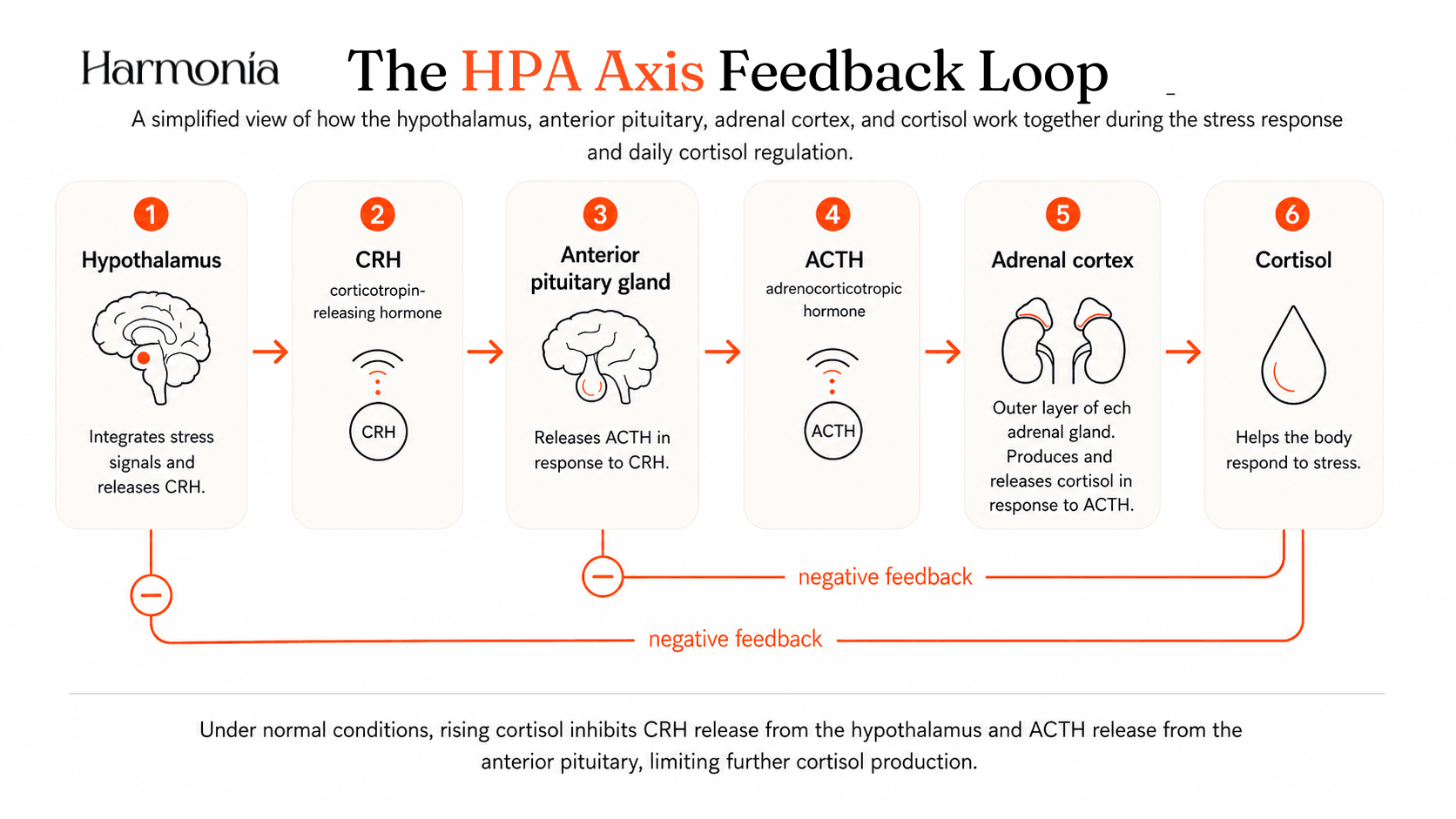
The HPA axis is a feedback system linking the hypothalamus, pituitary gland, and adrenal glands. The hypothalamus releases corticotropin-releasing hormone, or CRH. CRH signals the pituitary to release adrenocorticotropic hormone, or ACTH. ACTH then signals the adrenal cortex to produce cortisol.
Cortisol feeds back to the hypothalamus and pituitary, helping regulate further CRH and ACTH release. The system also follows circadian and pulsatile patterns, so one cortisol value cannot describe the full axis.
The broader guide to how the HPA axis works explains the feedback loop, daily rhythm, and role of cortisol in more detail.
What does “HPA axis support” mean on a supplement label?
“HPA axis support” is a supplement-marketing category without a standardized clinical endpoint. Products in this category often contain adaptogens, amino acids, phospholipids, vitamins, or minerals that have been studied for stress-related outcomes.
In the United States, manufacturers may use structure-function claims when they have substantiation that the claims are truthful and not misleading, submit the required FDA notification, and include the standard disclaimer. FDA does not preapprove those claims as proof that a product treats a disease or produces a specific endocrine result.
Can a supplement reset the HPA axis?
No published human trial identified for this review demonstrated a clinical reset of the HPA axis. A systematic review of 52 randomized human trials found that plant ingredients sometimes changed cortisol or related hormones, but the studies varied widely in population, dose, ingredient, sampling method, and outcome.
Ashwagandha produced the most consistent signal in that review, mainly through reductions in morning cortisol across several small studies. A lower cortisol value is not automatically beneficial, because cortisol is necessary for blood pressure, glucose regulation, immune signaling, and the normal response to illness and stress.
For a deeper explanation of why the goal is healthy regulation rather than indiscriminate suppression, see cortisol is not the enemy.
Stress-related HPA changes, adrenal fatigue, and adrenal insufficiency
These terms describe different concepts. Keeping them separate protects readers from using a supplement where medical testing or treatment is needed.
The Endocrine Society states that adrenal fatigue lacks scientific proof and that tests sold for it are not validated. Adrenal insufficiency can become life-threatening and needs medical care.
Can symptoms show whether cortisol is high or low?
Fatigue, anxiety, poor sleep, cravings, brain fog, and weight changes do not identify a specific cortisol pattern. Thyroid disease, iron deficiency, sleep apnea, depression, medication effects, perimenopause, infection, and other conditions can produce the same complaints.
A clinician may order cortisol testing when the history, examination, medication exposure, or other findings suggest adrenal insufficiency, Cushing syndrome, or another defined endocrine disorder. Routine saliva panels sold for adrenal fatigue do not answer that question.
The guide to symptoms commonly blamed on cortisol imbalance explains which symptom patterns warrant a broader medical evaluation.

Which HPA axis supplement ingredients have evidence?
The evidence tiers below reflect the number and quality of human trials, consistency across studies, relevance to the stated outcome, duration of follow-up, and whether the tested ingredient form resembles products currently sold.
How to choose: A useful formula lists exact ingredient amounts, plant parts, extract standardization, full serving size, and safety warnings. An ingredient name without a dose cannot be compared with a clinical trial.
Ashwagandha
Ashwagandha has the clearest short-term evidence in this category. NIH reviews several small trials reporting possible improvements in perceived stress, anxiety, sleep, or serum cortisol. The studies used different extracts and doses, so their results do not validate every ashwagandha product.
Most trials lasted 6 to 12 weeks. NIH describes short-term use as generally well tolerated for many adults while noting that long-term safety remains unknown. Drowsiness and gastrointestinal effects can occur, and rare liver injury reports have been published. Ashwagandha can affect thyroid function and may interact with sedatives, immune-suppressing drugs, diabetes medicines, blood-pressure medicines, and thyroid medicines.
Rhodiola rosea
Rhodiola has mainly been studied for fatigue, stress symptoms, and selected mental-performance outcomes. NCCIH states that reliable evidence remains insufficient to determine whether rhodiola is useful for any health-related purpose.
Insomnia, dizziness, headache, and dry mouth have been reported. A losartan interaction has also been documented. Earlier use may be reasonable when a person notices that rhodiola interferes with sleep, but this is a side-effect management choice rather than a proven efficacy rule.
Phosphatidylserine
Phosphatidylserine has narrow evidence from small studies of acute physical stress. One placebo-controlled study gave 800 mg daily for 10 days to 9 healthy men and reported a smaller ACTH and cortisol response to exercise.
The study was tiny, used a high dose, and tested a brain-cortex-derived preparation that differs from many modern soy or sunflower products. It does not establish an effect on baseline cortisol, chronic fatigue, or the HPA axis as a whole.
L-theanine
L-theanine has a larger body of randomized research than many supplement ingredients, with the strongest relevance to acute stress, attention, anxiety-related outcomes, and sleep. A 2026 systematic review and meta-analysis included 31 randomized trials with 1,168 participants.
Those findings do not show that L-theanine restores the HPA axis or produces long-term cortisol regulation. Drowsiness can occur in some people, and anyone using blood-pressure medicines or other calming products should review the combination.
Magnesium
Magnesium is essential for normal nerve, muscle, glucose, and blood-pressure regulation. Supplementation is most defensible when dietary intake or magnesium status is low.
A systematic review found observational links between magnesium status and sleep, while randomized supplementation trials produced uncertain results. The adult upper limit of 350 mg daily applies to magnesium from supplements and medications, not magnesium naturally present in food. Kidney impairment increases the risk from excess magnesium, and supplements can interfere with the absorption of some medicines.
Vitamin C and B vitamins
Vitamin C is highly concentrated in the adrenal glands, pituitary gland, brain, and several other tissues. That physiological fact explains why it appears in stress formulas, but it does not prove that additional vitamin C changes HPA-axis output in a person with adequate intake.
B vitamins support normal energy metabolism and nervous-system function. More is not automatically better. High supplemental vitamin B6 intake over time can cause nerve damage, so the total amount across multivitamins, energy products, and stress formulas should be checked.
Myo-inositol and D-chiro-inositol
Inositols are studied mainly for insulin signaling, ovulatory and androgen-related patterns in PCOS, and selected psychiatric outcomes. That evidence belongs to specific conditions and doses.
Inositols should be described as metabolic or condition-specific ingredients rather than direct HPA-axis supplements. Their inclusion in a stress formula does not establish an effect on cortisol or adrenal function.
Why can an HPA axis supplement make you tired?

An HPA axis supplement can cause daytime sleepiness when it contains an ingredient that produces drowsiness for that person, compounds a medicine’s sedating effect, or combines several calming ingredients in one serving.
Ashwagandha and L-theanine can cause drowsiness in some people. Antihistamines, sleep medicines, benzodiazepines, some antidepressants, alcohol, and other supplements can intensify the effect. A large first dose or several new products started together makes it harder to identify the cause.
Marked sleepiness, dizziness, confusion, faintness, or impaired driving is a reason to stop using the product and seek clinical or pharmacist advice. Sedation is an adverse effect, not evidence that the supplement is correcting the HPA axis.
When should you take an HPA axis supplement?
Timing should follow the ingredient, the product label, medication schedule, and individual response. There is no research-backed morning or evening rule for the category as a whole.
Who should review these supplements with a clinician or pharmacist?
How to read an HPA-support label
A useful label lets you compare the product with the research and identify avoidable safety problems.
- Find the exact amount of every ingredient. A proprietary blend total hides the individual doses.
- Check the plant part and extract. Root-only and root-and-leaf ashwagandha products are not automatically interchangeable.
- Look for standardization details, such as withanolide content for ashwagandha or rosavin and salidroside information for rhodiola.
- Calculate the full daily serving. One serving may require several capsules or scoops.
- Check all products for duplicated magnesium, vitamin B6, sedating herbs, or stimulants.
- Look for credible independent testing for identity and contaminants. Certification does not prove clinical effectiveness.
- Compare the intended duration with the study duration. An 8-week trial does not establish indefinite safety.
Fatigue after prednisone or other glucocorticoids needs medical assessment
Current or recent glucocorticoid exposure changes the safety calculation. Prednisone and other oral steroids can suppress the HPA axis, and clinically important exposure can also come from injections, inhalers, topical products, or combinations, depending on dose and duration.
The 2024 joint guideline from the European Society of Endocrinology and Endocrine Society provides clinician-directed guidance for tapering, assessing adrenal recovery, and treating glucocorticoid-induced adrenal insufficiency. Adaptogens do not replace a managed taper, stress-dose instructions, or prescribed glucocorticoid replacement.
When fatigue needs medical evaluation
Persistent fatigue deserves medical assessment when it lasts for weeks, limits daily function, or comes with other concerning signs. Severe weakness, repeated vomiting, fainting, very low blood pressure, confusion, unexplained weight loss, or skin darkening can point to adrenal insufficiency or another serious condition.
Skin darkening and salt craving are more characteristic of primary adrenal insufficiency, where aldosterone can also be affected. These signs do not diagnose the condition by themselves.
Fatigue can also come from sleep apnea, iron deficiency, thyroid disease, perimenopause, infection, depression, medication effects, or post-viral and autonomic conditions. A supplement trial should not delay evaluation.
Where Harmonia fits
If you're looking for a supplement to "reset your HPA axis," Harmonia isn't built around marketing promises. It's built around ingredients with human research for supporting the body's response to everyday stress.
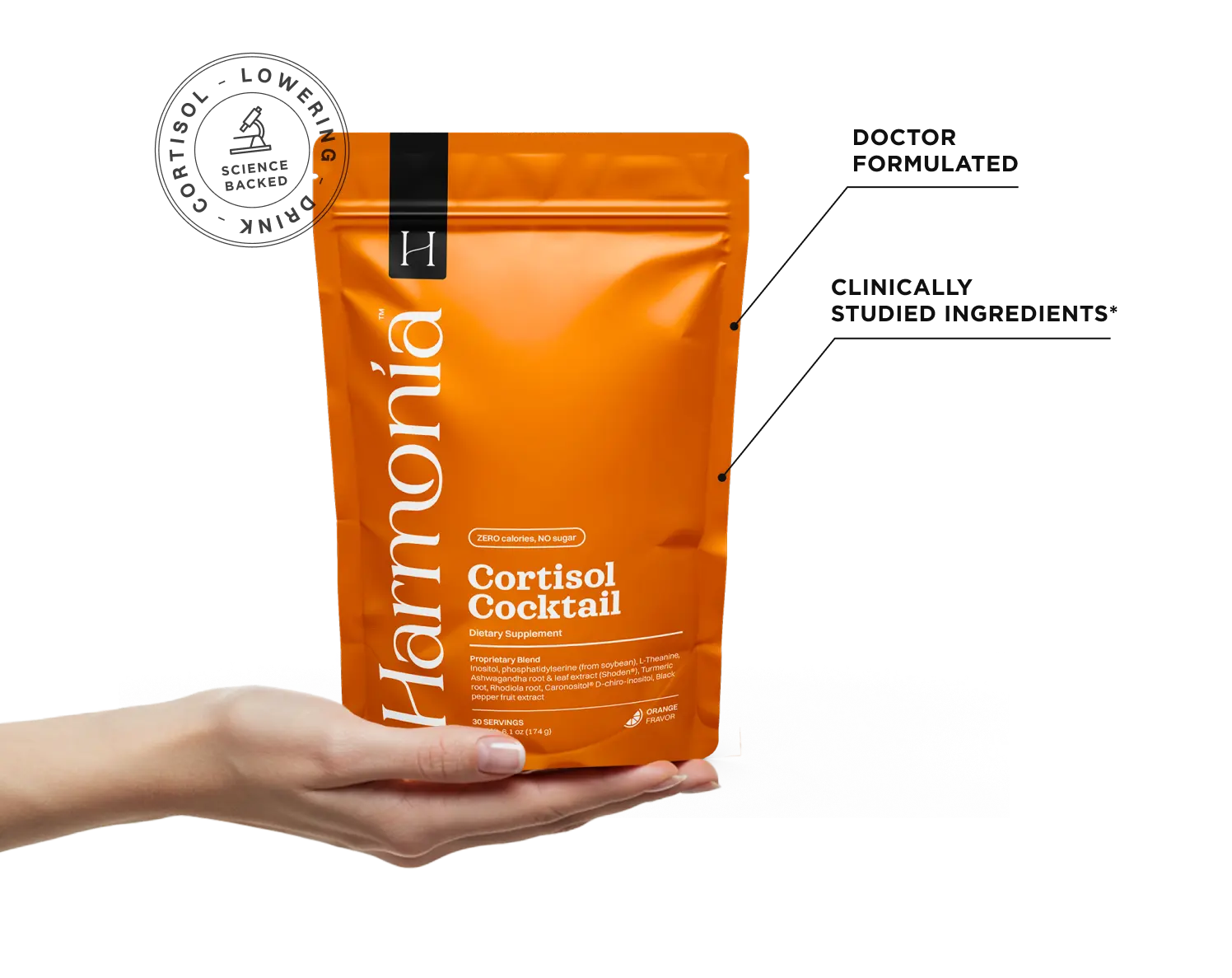
The Harmonia cortisol cocktail combines ashwagandha, rhodiola, L-theanine, myo-inositol, magnesium, and key vitamins in one convenient daily formula. Each ingredient was selected for a different aspect of stress support, including perceived stress, resilience, calm, sleep quality, or metabolic health, creating a more comprehensive approach than relying on a single ingredient.
While no supplement has been shown to repair or reset the HPA axis, several of Harmonia's ingredients have encouraging human evidence for supporting stress-related outcomes when used consistently as part of a healthy lifestyle.
Harmonia is intended for general wellness, not for treating adrenal insufficiency, endocrine disorders, or unexplained fatigue. If symptoms are severe, persistent, or follow steroid medication use, medical evaluation should always come first.
If you're ready to support your daily stress routine with a science-informed formula rather than a cupboard full of separate supplements, take the Harmonia Quiz to see whether Harmonia is the right fit for your goals.
_11zon.jpeg)
The bottom line
HPA axis supplements do not reset the HPA axis. Ashwagandha has the strongest short-term evidence for perceived stress and selected cortisol or sleep outcomes, while rhodiola, phosphatidylserine, L-theanine, magnesium, vitamins, and inositols have narrower or indirect evidence.
Choose products with disclosed doses, match each ingredient to the outcome actually studied, and review medication or health risks before use. Persistent or severe fatigue needs a medical evaluation.
If stress continues to show up through sleep, energy, or cravings after the basics are covered, you can take the Harmonia quiz to see whether the Harmonia cortisol cocktail fits what you are experiencing.
References
- Russell, G., & Lightman, S. L. (2019). The human stress response. Nature Reviews Endocrinology, 15(9), 525–534. Link
- Lim, C. T., & Khoo, B. (2025). Normal physiology of ACTH and GH release in the hypothalamus and anterior pituitary in man. Endotext. Link
- Lopresti, A. L., Smith, S. J., & Drummond, P. D. (2022). Modulation of the hypothalamic-pituitary-adrenal axis by plants and phytonutrients: A systematic review of human trials. Nutritional Neuroscience, 25(8), 1704–1730. Link
- U.S. Food and Drug Administration. Guidance for industry: Substantiation for dietary supplement claims made under Section 403(r)(6). Link
- U.S. Food and Drug Administration. Structure/function claims. Link
- Endocrine Society. Adrenal fatigue. Link
- European Society of Endocrinology & Endocrine Society. (2024). Diagnosis and therapy of glucocorticoid-induced adrenal insufficiency: Joint clinical practice guideline. Link
- NIH Office of Dietary Supplements. Ashwagandha: Health professional fact sheet. Link
- Javid, et al. (2026). From herbal hope to hormonal havoc: Chronic ashwagandha use and HPA axis suppression. Endocrinology, Diabetes & Metabolism Case Reports. Link
- National Center for Complementary and Integrative Health. Rhodiola: Usefulness and safety. Link
- Monteleone, P., Maj, M., Beinat, L., Natale, M., & Kemali, D. (1992). Blunting by chronic phosphatidylserine administration of the stress-induced activation of the hypothalamo-pituitary-adrenal axis in healthy men. European Journal of Clinical Pharmacology, 42, 385–388. Link
- Gerolymos, C., Saddier, E., Boyer, L., & Fond, G. (2026). Cognitive and affective effects of L-theanine: A systematic review and meta-analysis of randomized controlled trials. Molecular Psychiatry. Link
- Arab, A., Rafie, N., Amani, R., & Shirani, F. (2023). The role of magnesium in sleep health: A systematic review of available literature. Biological Trace Element Research, 201, 121–128. Link
- NIH Office of Dietary Supplements. Magnesium: Health professional fact sheet. Link