_11zon.jpeg)

Rhodiola rosea is often described as an adaptogen, but its most useful benefit is much easier to understand: it may help when ongoing stress leaves you mentally or physically drained.
Rather than acting like a classic stimulant, Rhodiola has mainly been studied for helping people stay functional during demanding periods. Human research also looks at mood, attention, exercise performance, and stress-related hormones, although the evidence is strongest for fatigue and exhaustion.
In a randomized trial of 60 adults with stress-related fatigue, 576 mg per day of a standardized Rhodiola extract improved fatigue and selected attention measures after 28 days.
What is Rhodiola rosea?
Rhodiola rosea is a plant that grows naturally in cold and high-altitude regions of Europe, Asia, and North America.
Its root and rhizome have a long history of traditional use for fatigue, weakness, and stress-related symptoms. You may also see it called:
- golden root
- arctic root
- rose root
- roseroot
The European Medicines Agency recognizes traditional use of Rhodiola root for temporary relief of stress symptoms such as fatigue and exhaustion.
Modern research usually focuses on standardized extracts, which contain defined amounts of key plant compounds.
What is Rhodiola rosea good for?
Rhodiola's strongest human evidence centers on stress-related fatigue and exhaustion.
Researchers have also studied it for:
The broader research on Rhodiola rosea benefits for women looks more closely at how these effects may matter when prolonged stress starts affecting energy, focus, and day-to-day resilience.
1. Rhodiola for stress-related fatigue
Stress-related fatigue is where Rhodiola stands out most clearly.
This is the kind of tiredness that can build when you have been under pressure for weeks or months and still need to keep functioning. You may feel mentally drained, physically flat, less motivated, or unable to concentrate the way you normally would.
In a randomized trial published in Planta Medica, 60 adults with stress-related fatigue took either 576 mg per day of the standardized SHR-5 Rhodiola extract or placebo for 28 days.
The Rhodiola group improved on fatigue and selected attention measures.
A 2012 systematic review of Rhodiola for physical and mental fatigue also found several positive studies, although the quality and design of the trials varied.
The practical takeaway is straightforward: Rhodiola may be most useful when stress is leaving you depleted rather than simply tense.

2. Rhodiola for mood and anxiety
Rhodiola has also been studied for mood and anxiety, although the research is much smaller.
A 2015 study in mildly anxious adults reported improvements in self-rated anxiety, stress, and some mood measures after 14 days of Rhodiola extract.
A small pilot study in 10 adults with generalized anxiety disorder also reported lower anxiety scores over 10 weeks.
These findings are interesting, but they should be interpreted cautiously. The studies were small, and one did not include a placebo group.
Rhodiola is therefore better viewed as a stress-resilience supplement with some early mood and anxiety evidence, not as an established treatment for an anxiety disorder.
3. Rhodiola and depression research
Researchers have also studied Rhodiola for depressive symptoms.
In a 12-week randomized trial of 57 adults, Rhodiola, sertraline, and placebo all produced changes in depression scores. Rhodiola caused fewer reported side effects than sertraline in that particular study.
A separate 2020 randomized trial tested Rhodiola alongside sertraline in 100 adults.
These studies make Rhodiola interesting from a research perspective, but they do not establish it as a replacement for antidepressant treatment.
Depression is a medical condition that deserves clinician-guided care, particularly when symptoms are persistent, severe, or affecting daily life.
4. Rhodiola for focus and mental performance
Rhodiola's cognitive benefits appear most relevant when the brain is working under stress or fatigue.
A 2025 randomized crossover trial in resistance-trained adults found better performance on a Stroop task after short-term Rhodiola supplementation.
The Stroop task measures attention and response control, so the finding supports the idea that Rhodiola may help maintain mental performance when someone is already working under strain.
That does not necessarily mean Rhodiola makes everyone more focused during an ordinary workday.
A more realistic way to think about it is:
Rhodiola may help you feel less mentally depleted when fatigue is interfering with concentration.
5. Rhodiola and physical performance
Rhodiola is also popular in sports and exercise supplements.
Some human trials report improvements in exercise capacity, fatigue, endurance, or other physical-performance measures.
A 2023 systematic review of randomized exercise trials found encouraging results but also substantial differences between studies in:
- dose
- training status
- duration
- type of exercise
- performance measures
The 2025 trial in resistance-trained adults also reported positive results across several exercise outcomes.
So Rhodiola may support physical performance in some settings, but the effect depends heavily on how and in whom it is used.
Does Rhodiola lower cortisol?
Rhodiola may influence cortisol during stress, but this is not where its evidence is strongest.
In the 60-person stress-fatigue trial, researchers reported a change in the cortisol awakening response, the natural rise in cortisol that occurs after waking.
However, a systematic review of human studies looking at the body's stress-hormone signaling system found that Rhodiola's overall effect remained unclear.
That distinction matters.
Rhodiola's strongest evidence is for stress-related fatigue and resilience, while ashwagandha has more direct human research around cortisol.
The broader evidence on supplements studied for cortisol helps show why these ingredients can play different roles in the same stress-support routine.
How does Rhodiola work?
Researchers do not have one simple explanation for Rhodiola's effects.
It appears to influence several systems involved in stress, brain signaling, and cellular energy use.
Two compounds appear frequently on Rhodiola supplement labels:
- rosavins
- salidroside
These are used as standardization markers, meaning manufacturers can produce an extract with more consistent levels of certain compounds from batch to batch.
That matters because many of the best-known Rhodiola studies used standardized extracts rather than plain dried root.
Rosavins, salidroside and standardized Rhodiola
A Rhodiola supplement may list around 3% rosavins and 1% salidroside, because similar levels have been used in well-known research preparations.
Those percentages are useful when comparing products, but they do not automatically make two extracts identical.
The exact preparation, extraction method, and manufacturing process still matter.
A 300 mg standardized extract should therefore not be compared directly with 300 mg of raw Rhodiola root.

How much Rhodiola do studies use?
There is no universal Rhodiola dose.
Human studies often use standardized extracts in the several-hundred-milligram range, but the amount depends on the preparation and what researchers are studying.
These are research protocols, not universal dosing instructions.
Some exercise studies use higher short-term amounts, but those protocols are designed to answer sports-performance questions rather than everyday stress or fatigue.
When comparing products, look at the extract, standardization, serving size, and research behind that specific preparation, not just the total number of milligrams.
When is the best time to take Rhodiola?
Morning or early afternoon is a practical choice for many people.
Rhodiola can feel stimulating, and insomnia is a reported possible side effect. Taking it earlier gives you more time to see how it affects energy and alertness without putting the dose close to bedtime.
Research has not established one universal best time of day.
Your response may also depend on:
- dose
- caffeine intake
- other supplements
- medications
- individual sensitivity
If Rhodiola makes you feel wired or affects your sleep, earlier dosing may be more comfortable.
How long does Rhodiola take to work?
There is no single proven onset time.
Stress and fatigue studies often measure improvements after 2 to 4 weeks of regular use, although some trials run longer.
Other research, particularly exercise and attention studies, has tested Rhodiola over much shorter periods.
For everyday stress-related fatigue, the most useful expectation is that benefits are usually studied over repeated use rather than after one dramatic dose.
Is Rhodiola a stimulant?
Not in the same way as caffeine.
Rhodiola is usually described as an adaptogenic herb, but some people experience it as stimulating.
Caffeine directly increases alertness through a different mechanism. Rhodiola's research is more focused on helping people maintain energy and performance when stress or fatigue is already wearing them down.
That difference is important.
Rhodiola may make some people feel more alert, but it should not automatically be treated as a caffeine substitute or traditional stimulant.
Rhodiola side effects and safety
Rhodiola is generally well tolerated when used as directed.
The European Medicines Agency Rhodiola monograph lists possible side effects including:
- headache
- nausea
- stomach discomfort
- diarrhea
- skin rash
- itching
Insomnia can also occur, particularly if Rhodiola feels stimulating.
If you develop a persistent or concerning reaction, stop using it and speak with a healthcare professional.
Rhodiola and medications
Rhodiola may affect how the body processes some medicines.
In a randomized crossover study involving 13 healthy volunteers, 14 days of Rhodiola changed the way participants metabolized losartan, a blood-pressure medication.
Antidepressants also deserve caution.
A published case report involving paroxetine and Rhodiola described restlessness and trembling after the combination was used.
If you take:
- antidepressants
- blood-pressure medication
- or another regular prescription medicine
review Rhodiola with your clinician or pharmacist before adding it.
Pregnancy and breastfeeding
Research during pregnancy and breastfeeding is limited.
If you are pregnant, trying to conceive, or breastfeeding, discuss supplemental Rhodiola with your clinician before using it.
Rhodiola vs ashwagandha: what's the difference?
Rhodiola and ashwagandha are both used for stress support, but they have somewhat different strengths.
Rhodiola is better known for:
- stress-related fatigue
- mental stamina
- staying functional during demanding periods
- some exercise-performance outcomes
Ashwagandha has stronger research for:
- perceived stress
- cortisol
- anxiety-related symptoms
- sleep
The differences between Rhodiola and ashwagandha help explain why someone might choose one, or why a formula might include both.
Where Rhodiola fits in Harmonia

Rhodiola has a clear role in Harmonia: supporting stress-related fatigue and resilience during demanding periods.
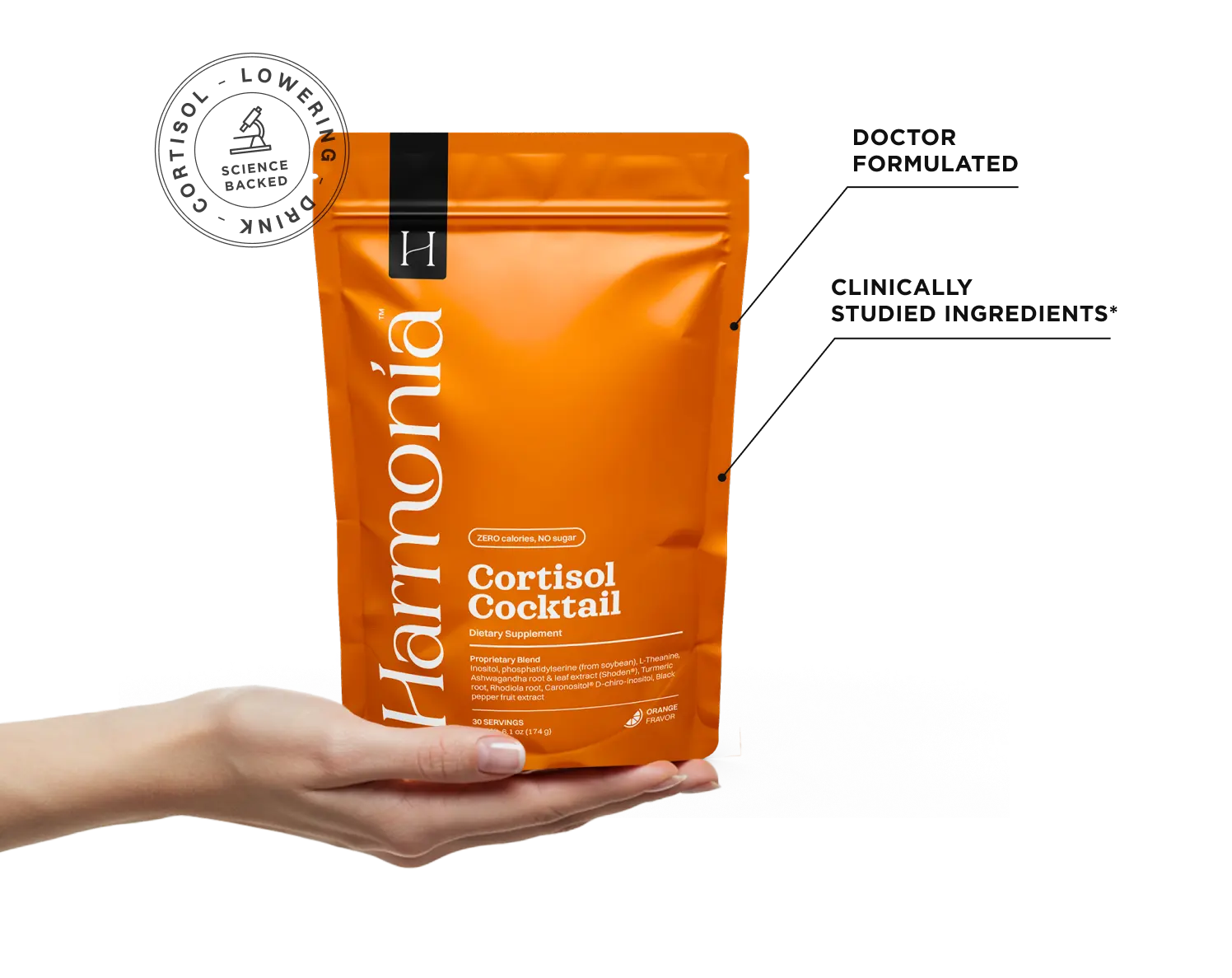
The Harmonia Cortisol Cocktail ingredient list pairs Rhodiola with ingredients that support different parts of the stress response.
KSM-66 ashwagandha provides stronger direct research around stress and cortisol, L-theanine supports calm focus, magnesium supports normal nervous-system function, and myo- and D-chiro-inositol contribute insulin and hormone-signaling support.
Rhodiola adds something different: support for the mental and physical fatigue that can build when stress goes on for too long.
That complementary role is why both Rhodiola and ashwagandha can make sense in the same formula. One has a stronger fatigue-resilience story, while the other has stronger direct cortisol research.
If ongoing stress is leaving you drained, the Harmonia Cortisol Cocktail brings those ingredients together in one daily formula designed for broader stress support.
The bottom line
Rhodiola rosea is best known for stress-related fatigue.
Human studies suggest it may help people feel less mentally and physically depleted during demanding periods, with additional research looking at mood, attention, and exercise performance.
Its cortisol evidence is more limited, so Rhodiola should not be thought of primarily as a cortisol-lowering supplement. Its stronger role is helping with the fatigue and reduced resilience that can come with ongoing stress.
The type of Rhodiola matters too. Standardized extracts with clearly listed rosavins and salidroside are easier to connect with human research than generic root powders.
In Harmonia, Rhodiola's fatigue-resilience role complements ingredients chosen for other parts of the stress response.
If stress keeps showing up through fatigue, focus changes, sleep problems, or hormone-related symptoms, you can take the Harmonia quiz to see whether the Harmonia Cortisol Cocktail fits what you're experiencing.
Frequently asked questions
What is Rhodiola rosea good for?
Rhodiola is best known for stress-related fatigue and exhaustion. Human research also looks at mood, attention, mental performance, and exercise.
Does Rhodiola give you energy?
Rhodiola may help some people feel less fatigued or depleted, especially during periods of prolonged stress. It is not a traditional stimulant like caffeine.
How much Rhodiola should you take?
Human studies commonly use standardized extracts in the several-hundred-milligram range, including amounts such as 340 mg, 400 mg, and 576 mg per day. The specific extract matters alongside the dose.
What is the best time to take Rhodiola?
Morning or early afternoon is a practical choice because Rhodiola can feel stimulating and may interfere with sleep in some people.
How long does Rhodiola take to work?
Stress and fatigue studies often measure improvements after roughly 2 to 4 weeks of regular use. Other research has tested shorter periods, so timing depends on the goal.
Can Rhodiola cause insomnia?
Yes. Insomnia is a reported possible side effect, particularly if Rhodiola feels stimulating. Taking it earlier in the day may help.
Can you take Rhodiola every day?
Daily use has been studied for periods of several weeks. Longer-term safety data are more limited, so ongoing use is worth reviewing with a healthcare professional.
Does Rhodiola lower cortisol?
Rhodiola may affect some cortisol patterns during stress, but direct human cortisol evidence is limited. Its stronger research is for stress-related fatigue.
Is Rhodiola better than ashwagandha?
Neither is universally better. Rhodiola has a clearer research role in stress-related fatigue, while ashwagandha has stronger direct evidence around stress, cortisol, and sleep.
References
- National Center for Complementary and Integrative Health. 2025. “Rhodiola: Usefulness and Safety.” Link
- European Medicines Agency, Committee on Herbal Medicinal Products. “Community herbal monograph on Rhodiola rosea L., rhizoma et radix.” Link
- Ishaque S, Shamseer L, Bukutu C, Vohra S. 2012. “Rhodiola rosea for physical and mental fatigue: a systematic review.” BMC Complementary and Alternative Medicine. 12:70. Link
- Olsson EM, von Schéele B, Panossian AG. 2009. “A randomised, double-blind, placebo-controlled, parallel-group study of the standardised extract SHR-5 of the roots of Rhodiola rosea in the treatment of subjects with stress-related fatigue.” Planta Medica. 75(2):105-112. Link
- Cropley M, Banks AP, Boyle J. 2015. “The Effects of Rhodiola rosea L. Extract on Anxiety, Stress, Cognition and Other Mood Symptoms.” Phytotherapy Research. 29(12):1934-1939. Link
- Bystritsky A, Kerwin L, Feusner JD. 2008. “A Pilot Study of Rhodiola rosea for Generalized Anxiety Disorder.” Journal of Alternative and Complementary Medicine. 14(2):175-180. Link
- Mao JJ, Xie SX, Zee J, et al. 2015. “Rhodiola rosea versus sertraline for major depressive disorder: A randomized placebo-controlled trial.” Phytomedicine. 22(3):394-399. Link
- Gao L, Wu C, Liao Y, Wang J. 2020. “Antidepressant effects of Rhodiola capsule combined with sertraline for major depressive disorder: a randomized double-blind placebo-controlled clinical trial.” Journal of Affective Disorders. 265:99-103. Link
- Lopresti AL, Smith SJ, Drummond PD. 2022. “Modulation of the hypothalamic-pituitary-adrenal (HPA) axis by plants and phytonutrients: a systematic review of human trials.” Nutritional Neuroscience. 25(8):1704-1730. Link
- Łuszczak J, Kocki J. 2026. “Clinical evidence for the adaptogenic effects of Withania somnifera and Rhodiola rosea: A systematic review with molecular interpretation of psychometric outcomes.” Annals of Agricultural and Environmental Medicine. 33(1):3-11. Link
- “Dose-Response Effects of Short-Term Rhodiola rosea Supplementation on Anaerobic Exercise Performance and Cognitive Function in Resistance-Trained Athletes.” 2025. Nutrients. 17(23):3736. Link
- Sanz-Barrio PM, et al. 2023. “Rhodiola rosea supplementation on sports performance: a systematic review of randomized controlled trials.” Phytotherapy Research. 37(10):4414-4428. Link
- Thu OK, Spigset O, Nilsen OG, Hellum B. 2016. “Effect of commercial Rhodiola rosea on CYP enzyme activity in humans.” European Journal of Clinical Pharmacology. 72(3):295-300. Link
- Junker-Cars, et al. “The interaction of Rhodiola rosea and antidepressants: a case report.” Link